Best Limestone Cladding Options: A Master Guide to Exterior
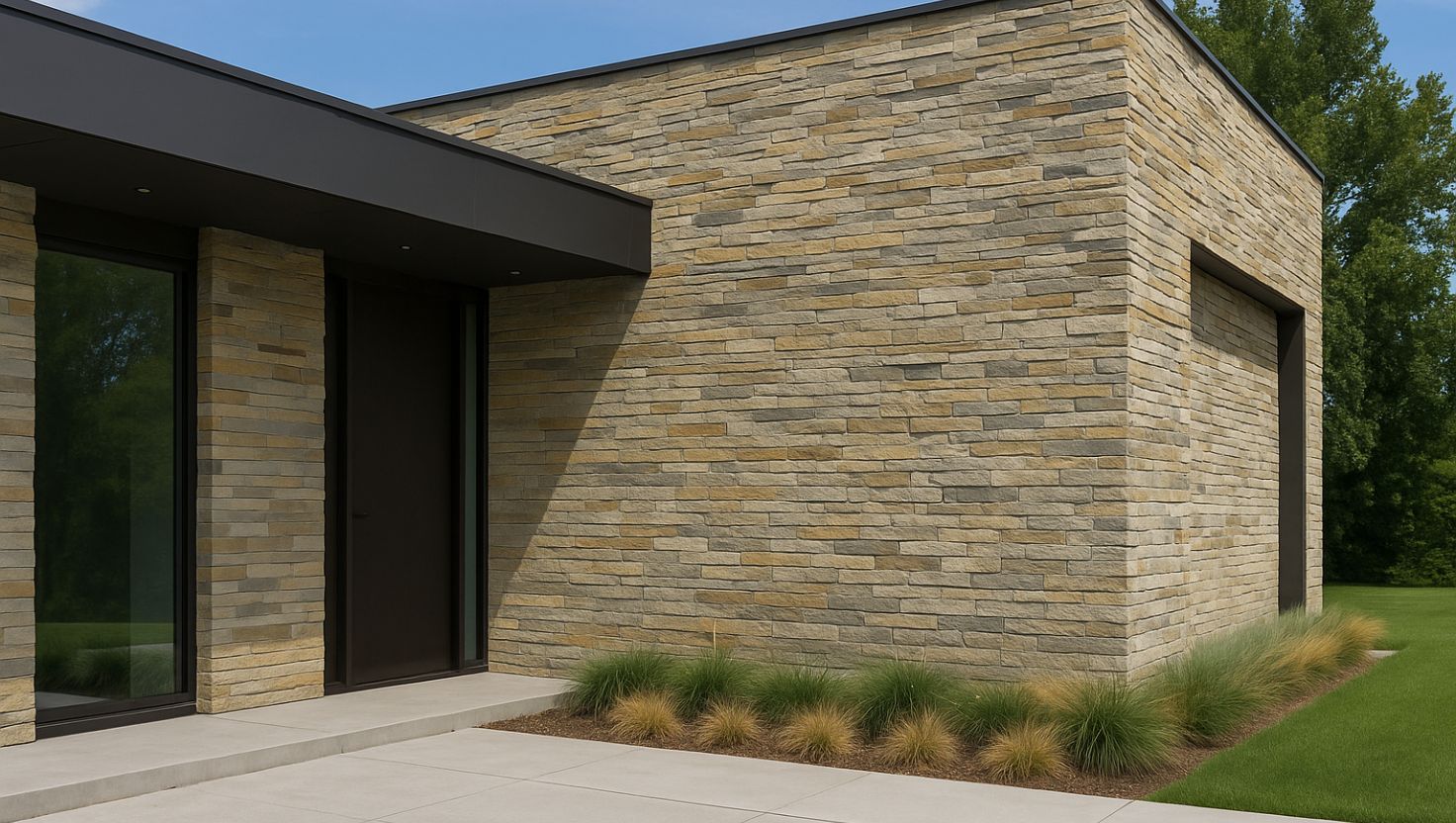
Limestone represents one of the most significant architectural contradictions in the history of the built environment. It is a sedimentary rock formed from the skeletal fragments of marine organisms—calcium carbonate deposited over millions of years—yet it serves as the definitive skin for some of the world’s most rigid and imposing institutional structures. Its popularity in high-end cladding is not merely a matter of its muted, sophisticated palette, but a result of its unique thermal mass properties and its relative ease of fabrication compared to igneous stones like granite.
Designing with limestone requires an analytical shift from treating the facade as a static decoration to viewing it as a porous, reactive membrane. Because limestone is calcareous, it is chemically sensitive to its environment. It breathes, it absorbs, and it reacts to the acidity of urban rain. When specified correctly, it ages into a distinguished patina that communicates permanence; when specified poorly, it becomes a canvas for unsightly staining, efflorescence, and structural spalling. The complexity of the material demands that the architect or developer look beyond the aesthetic of the quarry sample to the technical data of its mineral density.
This editorial exploration is designed as a definitive pillar for professionals navigating the global stone market. We will dissect the technical interplay between absorption rates, compressive strength, and the mechanical requirements of various anchorage systems. By treating the building envelope as a living system, we can move past surface-level recommendations and arrive at a rigorous understanding of how to integrate this ancient material into high-performance contemporary architecture.
Understanding “Best Limestone Cladding Options”
The search for the best limestone cladding options is frequently hindered by a fundamental misunderstanding: the assumption that “best” is a universal quality inherent to a specific brand or quarry. In a professional editorial context, the superior option is always defined by the intersection of three variables: the building’s geographic climate, the structural substrate, and the desired maintenance cycle. A soft, porous French limestone that thrives in the temperate climate of the Loire Valley may face catastrophic delamination if used on a high-rise in a freeze-thaw environment like Chicago or Toronto.
The risk of oversimplification in this field is high, particularly with the rise of “thin-stone” veneer. Many planners assume that because a stone is cut to a 1.25-inch thickness, it behaves like ceramic tile. In reality, limestone remains a reactive natural resource. A high-performance plan must evaluate the stone’s “modulus of rupture” to ensure it can withstand wind-load suction on a skyscraper’s upper floors. Selecting the best option requires a multi-perspective audit—assessing not just how the stone looks under gallery lighting, but how it performs when saturated with water and subjected to urban pollutants.
Furthermore, we must address the “Lithology of Origin.” The global stone trade often renames stones for marketing purposes, obscuring their actual geological properties. A true architectural specification looks for the ASTM C568 classification (Standard Specification for Limestone Dimension Stone), which categorizes limestone into three types: Low-Density, Medium-Density, and High-Density. The “best” choice for a high-traffic or harsh-weather exterior is almost exclusively found in the High-Density category, which offers a lower absorption rate and higher compressive strength.
Deep Contextual Background: From Monolith to Membrane
Historically, limestone was the structural bone of the building. The pyramids of Giza and the great cathedrals of Europe relied on the compressive strength of massive limestone blocks. In these “mass masonry” systems, the thickness of the stone provided both the structural support and the moisture management. If water penetrated the outer two inches of a three-foot-thick wall, it would simply evaporate before reaching the interior.
The 20th-century transition to steel and concrete skeletons changed limestone’s role from a load-bearing monolith to a protective membrane. Modern cladding is a “curtain” hung from the building’s frame. This shift decoupled the aesthetic of the building from its structure but introduced the “Cavity Wall” problem. Because we now use thinner slabs, moisture management becomes a matter of precision engineering rather than sheer mass. We no longer rely on the stone’s thickness to keep the interior dry; we rely on the drainage cavity and the air gap behind the stone.
Conceptual Frameworks and Mental Models
To master the selection of limestone, professionals utilize several key mental models:
-
The Rainscreen Framework: Treat the limestone facade as a primary shedding layer, not a waterproof seal. Assume water will bypass the stone via joints or its own porosity. The “best” system is the one that facilitates the fastest exit for that moisture through a ventilated cavity.
-
The Thermal Inertia Model: Limestone has high thermal mass but low R-value. It is a “slow” material that holds heat. In hot climates, this can be used as a solar shield; in cold climates, it must be paired with continuous insulation (CI) to prevent thermal bridging through the metal anchors.
-
The Pore Pressure Framework: Understand that when water freezes inside stone, it expands by approximately 9%. If the stone’s pore structure is too tight to allow for this expansion, or if it is too saturated, the stone will “spall” (the face will pop off). This model dictates the required porosity for a given climate.
Material Categories and Mineralogical Trade-offs
Limestone is generally categorized by its density and its “allochemical” components—the fossils and ooids that give it texture.
| Density Category | Typical Absorption | Compressive Strength | Best Application | Trade-off |
| High-Density | < 3% | > 8,000 psi | High-rise exteriors, harsh climates | Limited color range, higher cost |
| Medium-Density | 3% – 7.5% | 4,000 – 8,000 psi | Residential, temperate climates | Requires rigorous sealing |
| Low-Density | > 7.5% | < 4,000 psi | Interior accents, sheltered areas | Prone to staining and erosion |
Decision Logic: The “Exposure” Filter
When evaluating the best limestone cladding options, the decision should follow the logic of exposure. For a “base” course (the stone at ground level), a high-density, low-porosity limestone is mandatory to resist the salt used on sidewalks and the “splash-back” from rain. For upper-level cladding, a medium-density stone might be acceptable if the anchorage system accounts for the material’s lower modulus of rupture.
Detailed Real-World Scenarios Best Limestone Cladding Options
Scenario 1: The Urban Institutional High-Rise
A project in a city with significant acid rain and pollution.
-
Constraints: High wind loads and chemical erosion.
-
Decision Point: Selection of a high-density, siliceous-bonded limestone. This variant contains more silica, making it more resistant to acid-induced “sugaring” of the surface.
-
Failure Mode: Selecting a soft, oolitic limestone that loses its crisp architectural edges within a decade due to chemical weathering.
Scenario 2: The Coastal Residential Estate
A luxury home located within 500 yards of the ocean.
-
Constraints: High salt spray and constant humidity.
-
Decision Point: Use of a “Ventilated Rainscreen” with stainless steel anchors.
-
Second-Order Effect: The air gap prevents “salt-jacking,” where salt crystals form behind the stone, expand, and push the panels away from the wall.
Planning, Cost, and Resource Dynamics
The economic reality of limestone is that the “off-the-shelf” price is often a fraction of the total “installed” cost.
| Cost Component | Relative Weight | Variability Factors |
| Raw Material | 30% – 40% | Quarry rarity, slab size, waste factor |
| Fabrication | 20% – 25% | Honing, CNC carving, mitered edges |
| Logistics | 10% – 15% | Shipping distance, weight-to-volume ratio |
| Installation | 25% – 35% | Anchoring hardware, site access, height |
Range-Based Analysis: A high-end limestone facade typically ranges from $45 to $120 per square foot installed. The “Opportunity Cost” of a cheaper, lower-density stone is found in the increased maintenance—specifically the need for professional chemical cleaning and re-sealing every three years rather than every ten.
Tools, Strategies, and Support Systems
-
Petrographic Analysis: Pre-construction lab testing of specific quarry blocks to ensure they meet ASTM standards.
-
Digital Slab Mapping: Overlaying architectural drawings onto high-resolution photos of the specific slabs to ensure vein-matching.
-
Pressure-Equalized Rainscreen Systems: Framing that prevents air pressure differences from “sucking” moisture into the wall cavity.
-
Stainless Steel Grade 316 Anchors: The non-negotiable standard for preventing “rust-jacking” in stone.
-
Impregnating Sealers: Vapor-permeable sealers that protect against liquid water but allow the stone to “breathe” out trapped humidity.
-
CNC 5-Axis Machining: Allowing for complex, curved limestone forms that were historically impossible to carve economically.
Risk Landscape and Failure Modes
The “Taxonomy of Failure” in limestone cladding is usually a compounding issue.
-
Oxidation: Iron minerals within the limestone react with water, causing orange or brown “bleeding” on the facade.
-
Efflorescence: White salt deposits caused by water leaching minerals from the concrete backup or mortar and depositing them on the stone face.
-
Anchorage Corrosion: The most dangerous risk; using carbon steel anchors that rust and expand, eventually cracking the stone “kerf” and leading to panel detachment.
Governance, Maintenance, and Long-Term Adaptation
A limestone facade is a multi-decade asset that requires a governance protocol.
-
Monitoring: Annual visual inspections for “joint failure.” If the caulk between stones fails, the rainscreen system is compromised.
-
Review Cycles: Every 5 years, the facade should undergo a professional “sounding” (tapping the stone with a mallet) to detect hollow spots that indicate internal delamination.
-
Adjustment Triggers: If moisture is detected in the interior drywall, the “weep holes” in the stone facade should be checked immediately for blockages (insect nests or mortar debris).
Measurement and Evaluation
Evaluating the performance of a stone facade requires both qualitative and quantitative signals.
-
Leading Indicator: The rate of water absorption during a simulated rain event.
-
Lagging Indicator: The maintenance spend over a 15-year period.
-
Documentation: A “Stone Pedigree Log” that tracks every panel back to its quarry block for potential future replacement matching.
Common Misconceptions
-
“Limestone is waterproof.” It is actually one of the more porous natural stones; its “dryness” depends entirely on the drainage cavity behind it.
-
“Sealing stone solves all problems.” Sealing a stone that has already trapped moisture can actually accelerate damage by preventing the stone from drying.
-
“All white limestones are the same.” Variation in density between two white stones can be as high as 40%.
-
“Thicker stone is always better.” While thicker stone is more durable, it also adds massive “dead load” to the building, which can increase the cost of the structural steel.
Conclusion: The Ethics of Geological Permanence
The selection of the best limestone cladding options is ultimately a commitment to architectural longevity. In a world of disposable composites and short-lived synthetics, limestone offers a tactile connection to geological time. Its success depends not on its initial beauty, but on the designer’s willingness to respect its physical limits. By mastering the invisible components—the air gaps, the anchors, and the mineral density—we ensure that the stone facade is not merely a temporary skin, but a permanent legacy.